Official score from the judges' test.py on the five public stints. Our submitted Model 1 scores 76.92; the same car with no lift cues scores 48.22.
Four models, each built twice: a small neural network and the hand-built teacher it was copied from. "Official" is the judges' test.py on the five public stints with its perfect instant driver; the hidden stint is in none of these numbers. "Sim" is our own simulated driver on the same five stints, weighted as test.py, not the official score. Each render is one lap of ds1 from the neural car in the demo above: speed trace, with every lift cue shaded.
How each model's lift cue reaches the person in the seat.
Model 1 plans for the scorer's perfect, instant driver. On ds1 it fires about 40 cue blocks a lap, and 584 of its 884 blocks last under half a second. No light, tone or buzz can be followed at that rate, so it has no driver interface.
The lamp above replays Model 1's real cue at real time.
These models hold every cue block for at least 6 rows (0.545 s), so a person can act on them. The rig sends each cue through several channels at once.
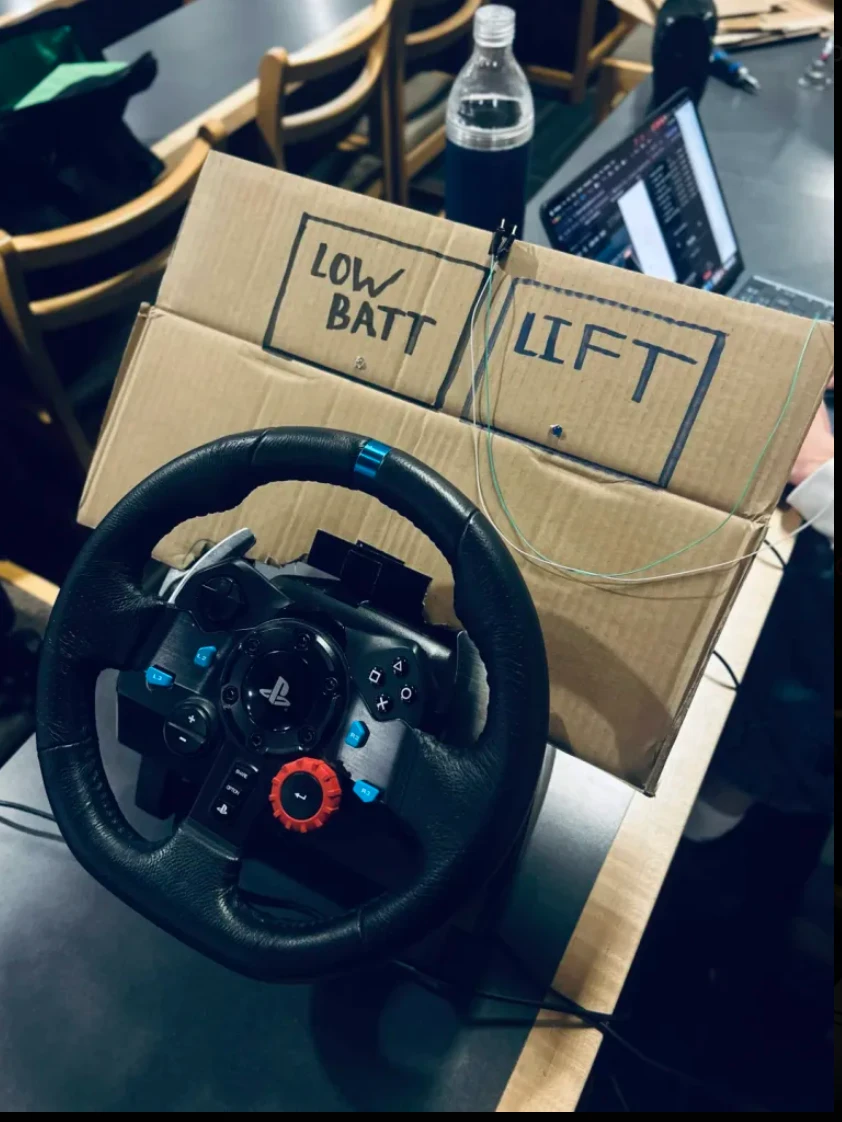
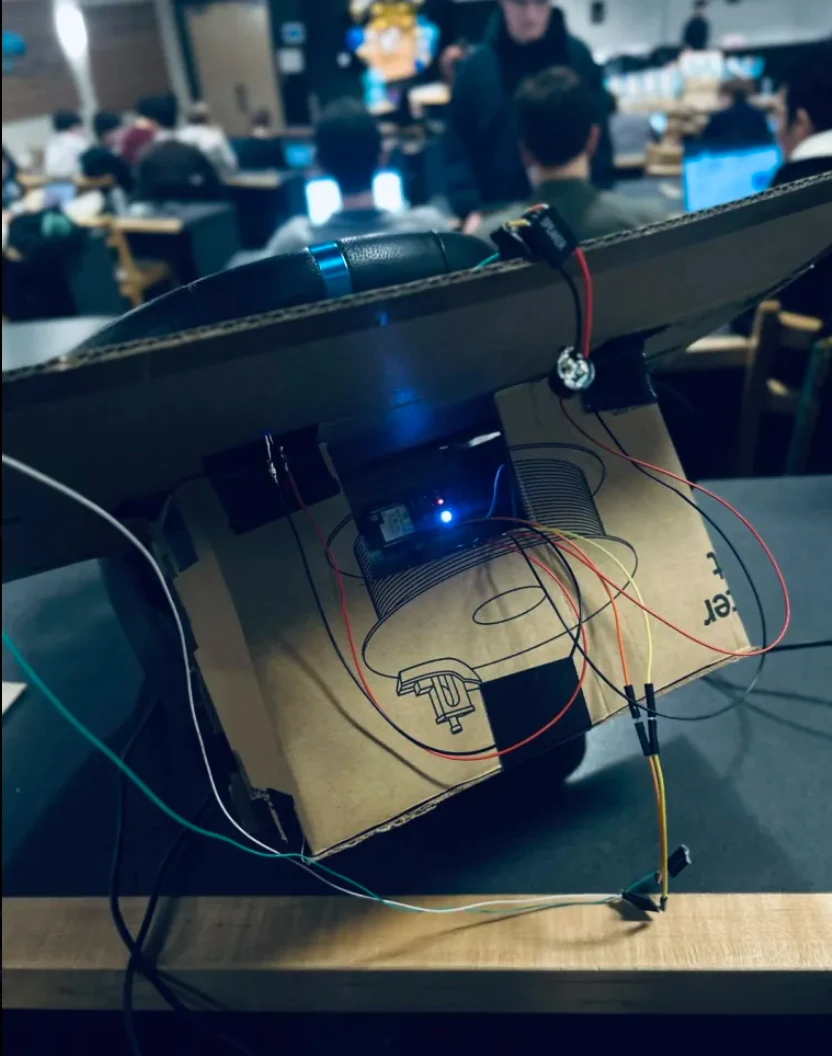
LIFT and LOW BATT lamps on a panel behind the wheel, driven by an ESP32.
A tone on each cue, so the driver's eyes can stay on the track.
A cue the driver feels instead of having to look for.
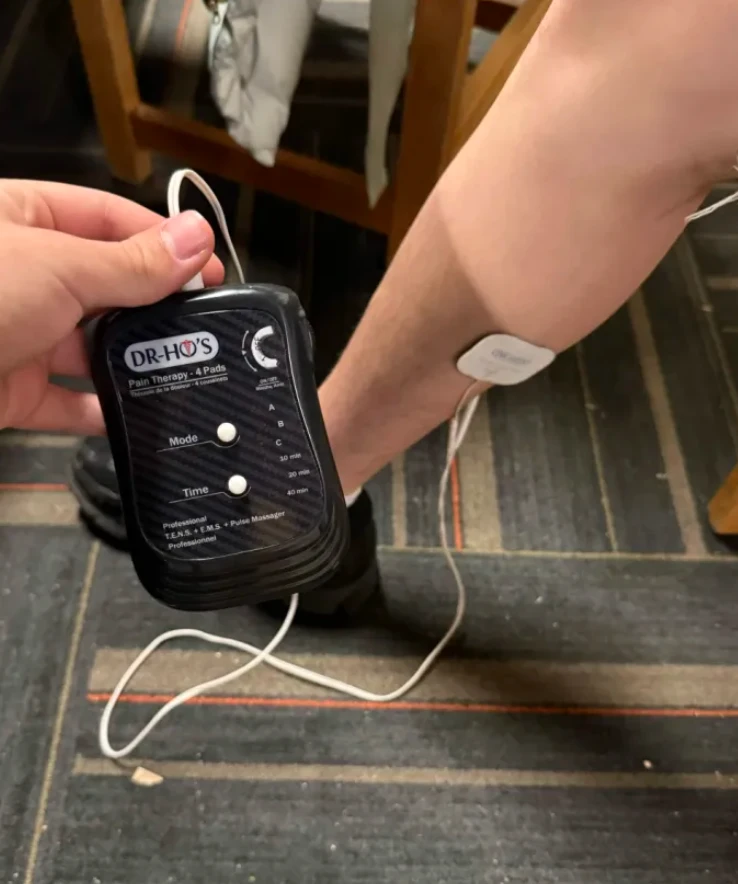
Sends an electric signal to the tibialis anterior, the shin muscle that lifts the foot, to trigger a muscle-memory lift off the throttle. Much faster than standard indication.